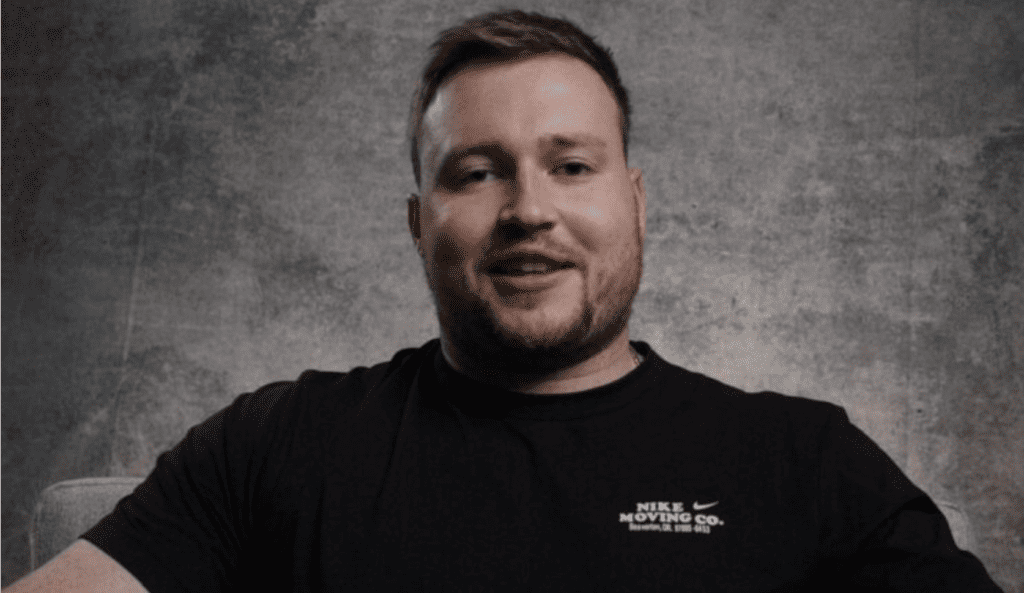
From producing content for the Premier League to working at global events like the E-sports World Cup, Wimbledon and 2023 Rugby World Cup, Cian's path into sports has been driven by persistence and passion for the sports he grew up watching. Keep reading to learn how he started his career in the industry, the challenges he overcame, and the advice he has for young people hoping to work in sports media.
9 Mins Read
Can you give our readers a bit of background on yourself?
Hi, my name is Cian Tookey. I am from the Bromley area, born and raised, but currently based in South East London. I’ve always had an interest in sport, mostly football and rugby. I’m a big Arsenal fan, but I also have a soft spot for Crystal Palace. When it comes to rugby, I’d say I’m a Harlequins fan. I’ve also played a lot of rugby, which has instilled a lot of values that I’ve gone on to use later. When it comes to other sports, such as cricket, I’ve worked with the Oval Invincibles, so I guess they are my franchise cricket team. I’ve also worked with the Cardiff Devils in Ice Hockey.
What got you into sports, and how did that progress into a career?
My dad got me into sports; he’s always been really into football. He took me to my first game when I was four. He’s a Crystal Palace fan, but clearly he didn’t raise me well enough, because I’m an Arsenal fan! I remember looking around the stadium the whole time when I was younger, and that’s really how he got me into football. I think I realised early on that I’ve always enjoyed rugby and football, and I’ve always been a big believer that if you enjoy the field you’re working in, it makes the work a lot easier. I’ve had a few tough jobs along the way, and they helped me realise that I want to work in sport.
What does your current role entail, and what are the key skills you need to have?
My current role is quite hard to label as I’m freelance, but I’d describe myself as a Digital Media Producer. A lot of that involves working on social media and helping run various accounts, as well as a fair bit of assistant producing, especially on accounts like EAFC (EA Sports FC) and FC Pro. I also go out and shoot content, gathering footage for the Premier League and doing other ‘on the ground’ jobs.
In terms of key skills, it involves a lot of ideation, such as coming up with new ideas that will make strong social videos, along with preparing media days, logging, building relationships quickly, thinking on your feet, and delegating. Because I work across so many different social accounts, it’s all about finding the niche for each one and creating something that fits within the social media landscape, including current trends.
What are your biggest achievements in the industry so far?
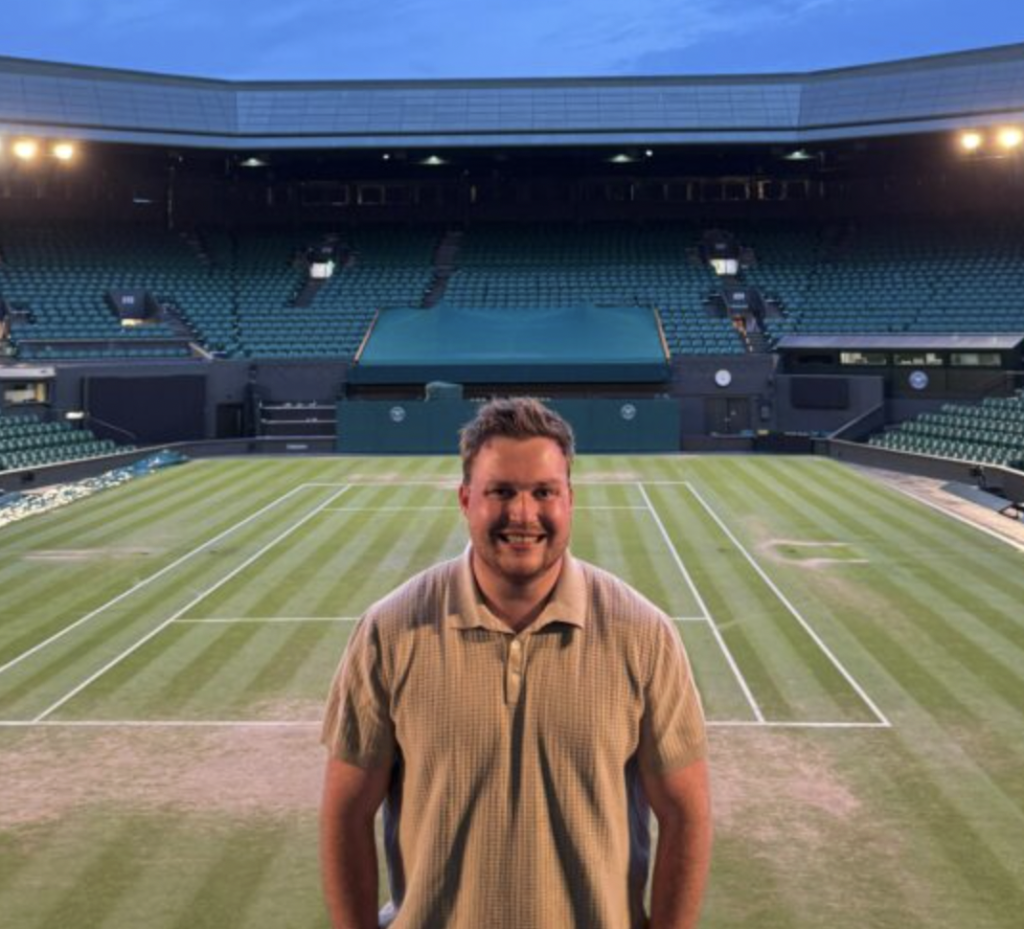
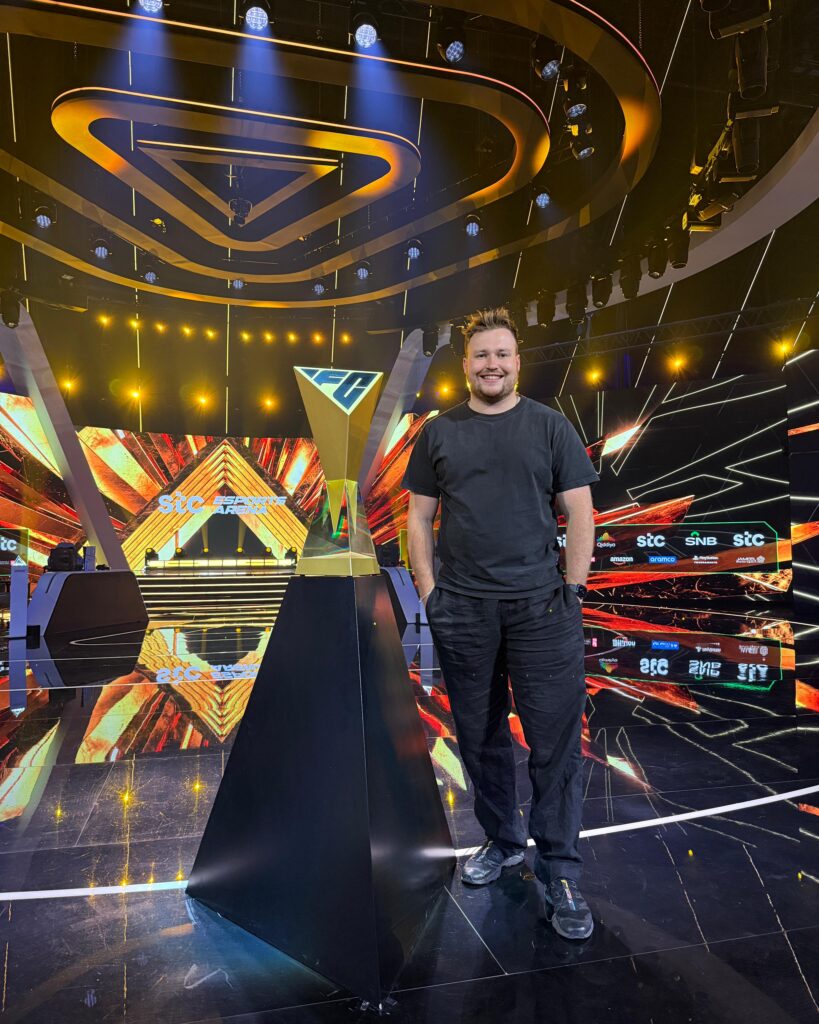
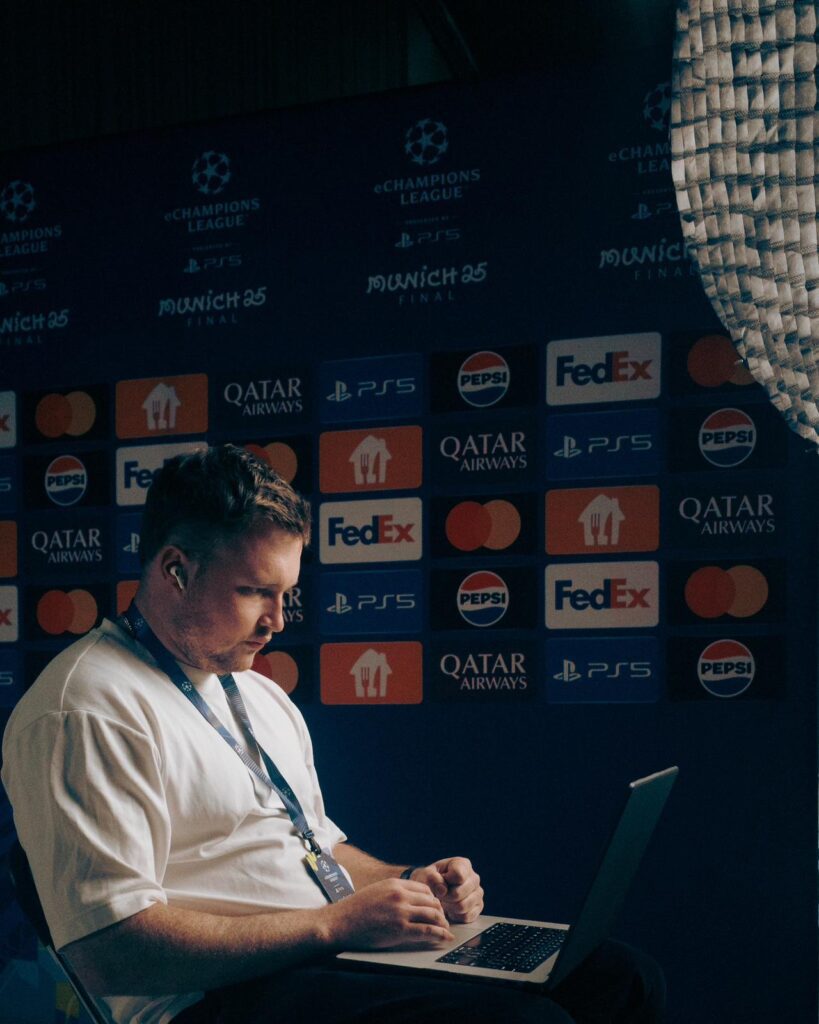
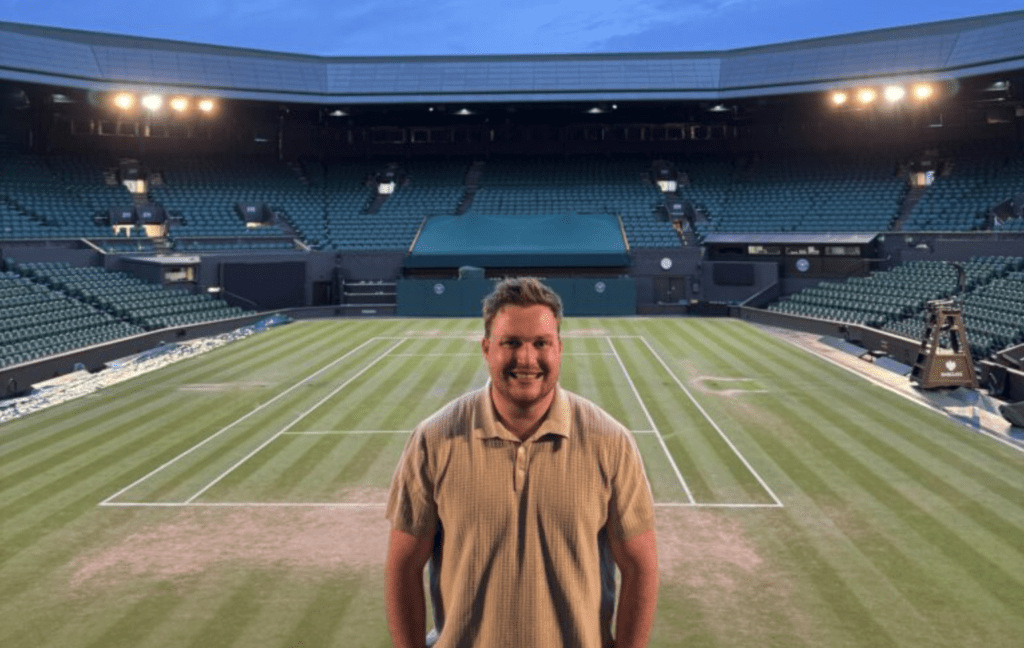
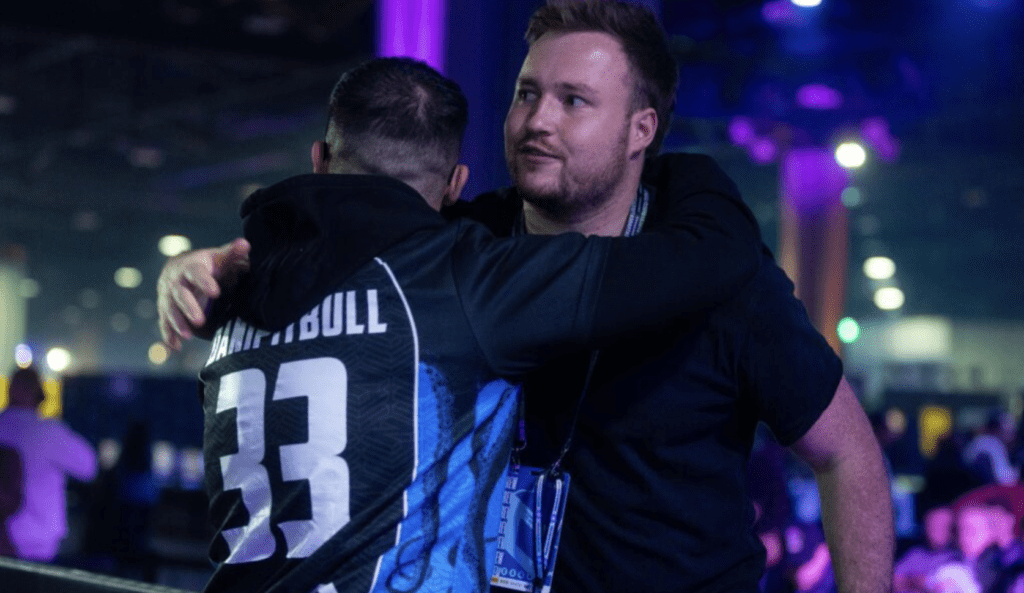
I’d say working at Wimbledon and definitely working on the Premier League, as that was something I have wanted to do since I was young. I covered a lot of Premier League games for Premier League Productions regularly last season. Additionally, working on the Champions League as well, and getting to travel to Milan for the second leg of the Inter Milan v Barcelona semi-final, that was huge! The Hundred Final was another big highlight, as well as travelling to Saudi Arabia for the E-sports World Cup. Finally, working on the 2023 Rugby World Cup, even though I was doing it remotely, felt significant because I had set myself that challenge at the start of my master’s degree, and I did it. So the next big challenge I have for myself is working on the 2026 FIFA World Cup, and I’m hoping I can make that happen.
What has your role taught you?
The freelance world has taught me to be resilient; take the work you can, but also learn how to navigate a work–life balance. I’m a big believer in “the harder you work, the luckier you get”, so I don’t mind putting in the longer hours. There’s always more I could be doing. People always ask me what I do and they exclaim, “that’s sick, you work in sports!”, and it is an unbelievable job, but there’s some real hard graft involved. There are definitely harder jobs out there, but this one comes with long days and a lot of anti-social hours that you just have to get used to. I’m trying to work on that balance and not let my personal life slip.
What challenges did you face getting into the industry?
The sports industry, and the media industry in general, doesn’t automatically reward having a degree. Many people have one, but it doesn’t get your foot in the door. You have to try really, really, really hard to make connections and network. “Your net worth is your network”; that’s a good saying. I definitely struggled because I didn’t know anyone in the industry. I had a few jobs when I was younger, but I was probably a bit too young to capitalise on them. I got a role on Strictly Come Dancing when I was 18 and worked on it again the following year. I also worked on The Masked Dancer, but I didn’t really know how to make the most of it at the time.
The real reason I got into the industry was because I did a master’s, after my undergraduate degree, in Sports Broadcasting at Cardiff Metropolitan University, which really helped open doors. It taught me how to edit, shoot, produce, direct, tell a story, present, and report. It made me into this “Swiss army knife’ type of person, which is really valuable when you’re first trying to break in. I was also doing the course with people who had a lot of industry connections, and that’s how I got in.
What one thing would you change about the industry?
The obvious one is creating roles for people just coming into the industry that don’t rely solely on “who you know”. The issue with the sports media industry is that you’re held to such a high standard; if you’re bringing someone in, you want them to be good and not need too much teaching. Or you want to bring someone in right at the start of their career, when they have no experience, so the organisation can train them exactly how they want. But it becomes harder to get into these roles when you’re older. It’s about having various schemes available after university and making the opportunities more accessible.
What is one piece of advice you would give to a young person who is looking to enter into Sports Media?
Grow your social brand. If you want to get into content and social media, utilise your own social media platforms as much as you can. There’s no barrier to entry; you can teach yourself how to edit and learn what kind of content works. You don’t need to get mega famous, but you do need to be able to bring a portfolio of your own work. Whether that’s creating content for your local sports team or helping someone else build their personal brand, you need to show that you are competent by doing it on your own and that you can handle as many skills as possible yourself, for example, writing copy, editing, producing, and directing. If you can do that and show it to an employer, they will love you. People want others who can make their lives easier.
So if you can do that, you’ve got a winning formula. Work really hard on utilising what you have and what you do have is your own social media platforms, or the chance to help build someone else’s. Find out what works, identify the trends that work, and really commit to it.
Who do you look up to in the sporting world and why?
I’d say Brandon Smith, the commentator on all the FC Pro work. He also just worked on the FIFA Club World Cup. He’s trying really hard to create this “Brandon Smith ecosystem”, where he’s a commentator on camera, but whenever he has any downtime at events, he’s out filming content with people. He’s so content-driven and one of the most driven people I’ve seen. His work ethic inspires me. Laura Woods, the presenter, is another. I think she’s great. I really like her presenting style and how composed she is. Having read about how she started at Sky, first in a producer role and then moved into presenting, I think that’s fantastic. There are a few others where I think, “wow, you’re smashing it”, but those are the two names really inspiring me at the moment.
If you could pick the brain of anyone in the industry over coffee, who would it be and why?
Gary Lineker. It would be interesting to see what it’s like for him coming from a football background into presenting, and everything he went through there. Laura Woods would also be really interesting to talk to, and Clare Balding, because I like her interviewing techniques. What I find interesting is any presenter who has embraced the social media trend and got into broadcasting because of that.
What is your favourite piece of advice you’ve received in your sports journey?
“Know your worth” is a good one. Another piece of advice I like is about drawing a triangle and only taking a job if it ticks two out of three boxes: something you’re interested in, something that will progress your career, and something that pays really well. If it doesn’t tick at least two of those, you don’t take it, and I think that’s really interesting. I choose a lot of my jobs that way, and there have been roles I have said no to because they didn’t tick two of the three. That’s why I haven’t gotten too bogged down about the jobs I’ve had; I’ve been quite lucky. I’ve really tried to use this approach in the early stages of my career. I’ve only been doing my job for nearly two years, so my career is still very much in its infancy, but that’s how I see it.